
Treatment
Cataract surgery
A cataract is a clouding of the eye’s natural lens. Surgery replaces the cloudy lens with a clear artificial one, and it is one of the most common operations in medicine.
What a cataract is
Inside your eye, behind the coloured iris, sits a small clear lens that focuses light. With age — and sometimes after injury, with diabetes or long-term steroid use — proteins in that lens clump together and it turns cloudy. The cloudiness is the cataract.
In Arabic it is often called الماء الأبيض, “white water”. It is not the same as glaucoma, الماء الأزرق, which is a problem of eye pressure and the optic nerve.
Signs you may have one
- Vision that is blurry, faded or yellowish, like looking through a dirty window
- Glare and halos around lights, especially when driving at night
- Needing more light to read
- Prescription changes that come more often than before
- Double vision in one eye
When surgery makes sense
There is no eye drop or tablet that clears a cataract. Early on, a new glasses prescription and better lighting may be all you need. Surgery is usually recommended when the cataract starts getting in the way of your daily life — reading, driving, work, or simply enjoying what you see. Your doctor will examine both eyes and talk it through with you.
How the operation is done
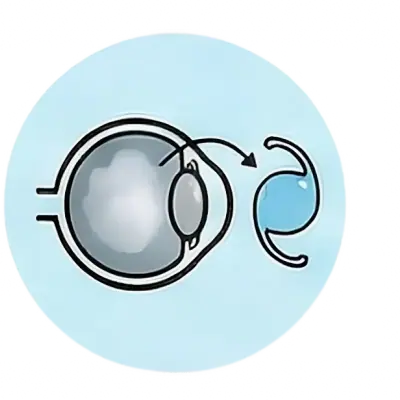
The surgeon makes a tiny opening at the edge of the cornea, softens the cloudy lens with ultrasound (phacoemulsification) and removes it, then places a folded artificial lens — an intraocular lens, or IOL — in the same spot, where it stays permanently. The opening is usually small enough to seal on its own.
Before surgery your eye is measured carefully so the lens power suits you. Your surgeon will explain which lens options fit your eyes and your daily needs.
Recovery
- You will rest for a short while and go home the same day — arrange for someone to drive you
- Expect to use eye drops for a few weeks and to wear a shield at night at first
- Many people notice clearer, brighter colours within days; vision keeps settling over a few weeks
- Avoid rubbing the eye, swimming and dusty places until your doctor says it is fine
- You may still need glasses for some tasks, depending on the lens chosen
Risks to know about
Cataract surgery has a long track record, but like every operation it carries risk. Possible problems include inflammation, raised eye pressure, infection (rare but serious), swelling at the back of the eye and, rarely, retinal detachment. Months or years later the membrane behind the new lens can turn cloudy; this is common and is treated with a quick laser procedure in clinic.
Call us urgently if, after surgery, you have worsening pain, a sudden drop in vision, or increasing redness.
Common questions
Does cataract surgery hurt?
It is done under local anaesthesia, so most people feel pressure or touch rather than pain. Your eye may feel gritty for a few days afterwards.
Can a cataract come back?
The cataract itself cannot return, because the natural lens is removed. The capsule behind the new lens can become hazy later; a short laser treatment clears it.
Will I still need glasses?
Often for some tasks, such as reading. It depends on your eyes and the lens chosen — your surgeon will discuss this with you before the operation.
Is there an age limit?
No. The decision depends on how much the cataract affects your vision and your general eye health, not on age alone.