
Treatment
LASIK & PRK laser eye surgery
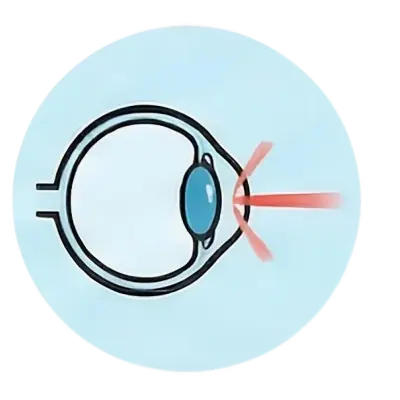
Laser vision correction reshapes the cornea — the clear front window of the eye — so that light focuses properly. For the right eyes it can reduce or remove the need for glasses or contact lenses.
Is it right for you?
Not every eye is suited to laser correction, and finding that out is the most important part of the process. A detailed assessment measures the shape and thickness of your corneas and checks the rest of your eye.
- Usually 18 or older, with a prescription that has been stable for about a year
- Healthy corneas of enough thickness — corneal mapping shows this
- No active eye disease; certain conditions, pregnancy and some medicines affect timing
- Realistic expectations: the goal is less dependence on glasses, which differs from person to person
A note on keratoconus
If the assessment shows keratoconus — a thinning, bulging cornea — LASIK is not done, because thinning the cornea further can make it worse. Keratoconus is treated in other ways, such as corneal cross-linking.
Read about keratoconus and cross-linking
Femto-LASIK and PRK: the difference
In Femto-LASIK, a femtosecond laser creates a thin flap on the surface of the cornea; a second laser reshapes the tissue underneath and the flap is laid back. Vision usually recovers quickly, often within a day or two.
In PRK, there is no flap. The thin outer skin of the cornea is removed, the surface is reshaped, and the skin grows back over a few days under a protective contact lens. Recovery is slower and the first days are more uncomfortable, but PRK can suit people with thinner corneas or very active lifestyles. Your doctor will recommend the option that fits your eyes.
Recovery
- Plan for someone to take you home on the day
- Use the prescribed drops exactly as directed; dryness is common for a while
- Avoid rubbing your eyes, swimming and dusty environments until cleared
- Follow-up visits check healing and how your vision settles
Risks to know about
Possible side effects include dry eyes, glare or halos at night, and under- or over-correction that may need glasses or a further treatment. Serious complications are uncommon. A careful assessment beforehand is the best way to keep risk low, which is why we do not skip it.
Common questions
Will I never need glasses again?
Many people rely on glasses much less afterwards, but this differs from person to person. Reading glasses are still normally needed with age, from the mid-forties onwards.
Does LASIK hurt?
Numbing drops are used, so you may feel pressure rather than pain during the laser. After PRK the first few days are usually more uncomfortable than after LASIK.
Can I have both eyes done on the same day?
Often yes for laser correction, but your doctor decides based on your assessment.
Why was I told I am not a candidate?
Usually because of corneal thickness or shape, an unstable prescription, or another eye condition. Being told “not yet” or “not suitable” protects your eyes.