
Treatment
Eye exams & diagnostics
A comprehensive eye exam checks much more than whether you need glasses. It looks at the health of the whole eye — and can pick up conditions like glaucoma, diabetic eye disease and keratoconus before they cause symptoms.
What a full exam includes
- Vision on the letter chart, near and far
- A precise glasses prescription (refraction)
- Eye pressure, to screen for glaucoma
- A microscope (slit-lamp) examination of the front of the eye
- A look at the retina and optic nerve, often with dilating drops
- Eye alignment and movement — especially important for children
Detailed tests your doctor may request
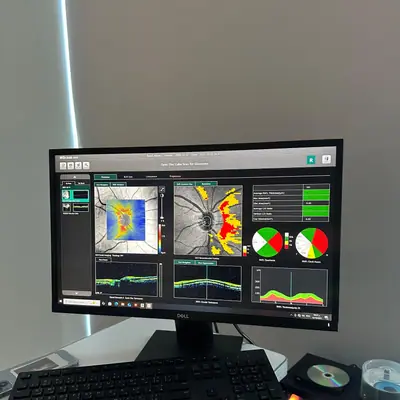
Depending on what the exam shows, your doctor may ask for further tests — such as imaging of the retina and optic nerve, mapping of the cornea before laser surgery or for keratoconus, or a visual field test for glaucoma. Each one answers a specific question about your eyes.
How often to have an exam
- Children: a check before starting school, and sooner if you notice a squint, squinting or difficulty seeing
- Adults under 40 with no problems: every couple of years
- Over 40: every one to two years, as glaucoma and cataract become more common
- With diabetes: once a year, including a retinal check
- With a family history of glaucoma or keratoconus: as your doctor advises
Book sooner if you notice…
Blurred or changing vision, eye pain, redness that does not settle, double vision, frequent headaches with reading, or a child who holds books very close or tilts their head to see. For sudden loss of vision, flashes with new floaters, or a painful red eye, seek help the same day.
If your pupils are dilated
Dilating drops make your vision blurry and sensitive to light for a few hours. Bring sunglasses, and arrange for someone else to drive you home.
Common questions
Is a free eye test at an optician the same thing?
A sight test checks your glasses prescription. A comprehensive exam by an ophthalmologist also examines the health of the eye — the pressure, the retina, the optic nerve and more.
At what age should my child have a first exam?
Any time you have a concern, even as a baby. Otherwise, a full check before school age is sensible, especially if there is a family history of squint or strong glasses.
Do I need an appointment?
Yes — book online or call your nearest branch, and we will find a time that suits you.