
Treatment
Squint & eye muscle surgery
A squint (strabismus) means the eyes are not pointing in the same direction. It is common in children and also happens in adults. Treatment can include glasses, patching or surgery on the muscles that move the eye.
What a squint is
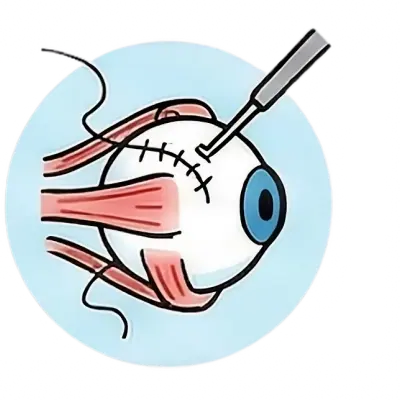
Six small muscles move each eye. When they do not work together, one eye can turn in, out, up or down — all the time or only now and then. In children, the brain may start to ignore the turned eye, which can lead to a lazy eye.
A squint (الحول) and a lazy eye, amblyopia (كسل العين), are related but not the same: one is about alignment, the other about how well an eye sees.
Why early checks matter for children
A child’s vision develops in the first years of life. Treating a lazy eye works best while the visual system is still developing, so an eye that turns — or a family history of squint or strong glasses — is a good reason for an exam, even in a young child. Babies’ eyes can wander in the first few months, but a turn that persists should be checked.
Treatment options
- Glasses — sometimes the squint is driven by long-sightedness and glasses alone straighten the eyes
- Patching or drops — to make a lazy eye work harder
- Eye muscle surgery — to adjust the position of one or more eye muscles so the eyes line up
- Regular follow-up — alignment and vision can change as a child grows
About eye muscle surgery
The surgeon works on the muscles on the surface of the eye, tightening or moving them to change the eye’s position. The eye is not removed from its socket. Children usually have a general anaesthetic and go home the same day. Some people need more than one operation over time, and glasses may still be needed afterwards.
Recovery
- Redness and a scratchy feeling for one to two weeks are normal
- Eye drops are usually prescribed
- Most children return to school within a few days
- Follow-up checks track alignment and vision
Common questions
Will my child grow out of a squint?
Some brief wandering is normal in babies, but a squint that persists does not usually go away on its own. It should be checked, because a lazy eye is easier to treat early.
Can adults have squint surgery?
Yes. Adults may have it to relieve double vision, improve eye alignment, or both.
Is a squint just cosmetic?
Not always. In children it can affect how vision develops; in adults it can cause double vision and eye strain.